

How You Identify Plan,animal And Bacteria Cells
Unit L7
Seeing Within Cells
 Lesson: Comparing Cells
Duration: Approximately 90 minutes
Compare and contrast plant, animal, yeast, and bacteria cells, then swoop into models of cells to notice how their parts function together as a whole jail cell arrangement.
LEARNING OBJECTIVE
Students compare and dissimilarity plant, animal, and yeast cells and explore models of cells to discover how their parts part together as a whole cell system.
Teacher Tips
- While the model doesn't use audio, some teachers find that using headphones helps students concentrate while interacting with computers.
Materials (ane per student or group)
- electronic device (such as computer, laptop, tablet) to use the interactive elements equally individual students or in groups of 2–4
Teacher Melody-ups
- How do substances laissez passer through the cell membrane on their own?
- How does the cell movement big particles through the cell membrane?
- How do I teach students about microscopes?
Action OVERVIEW
- Ready the context for the activity (5 minutes)
- Compare four kinds of cells: beast, plant, leaner, yeast (xx minutes)
- Explore 3D beast, plant, and bacteria cell models (10 minutes)
- Form Follows Role: compare cells within organisms (15 minutes)
- Review the activity (x minutes)
- Optional cess (15 minutes)
Set the context for the activity (five minutes)
Ask:
What practice you think cells are made of?*
What exercise you remember cells need to stay alive?*
What are cells?
Where practice you observe cells?
How big or small are cells?
Note: Starred (*) questions developed by Calibration / SFUSD
Consider doing this prompt activity as a pair/share: have the students discuss these questions with a partner so share some of the answers that came up in a class discussion.
 What do y'all recall cells are made of?
What do you think cells need to stay alive?
What are cells?
Where do you find cells?
How big or small are cells?

Compare four kinds of cells: beast, plant, bacteria, yeast (20 minutes)
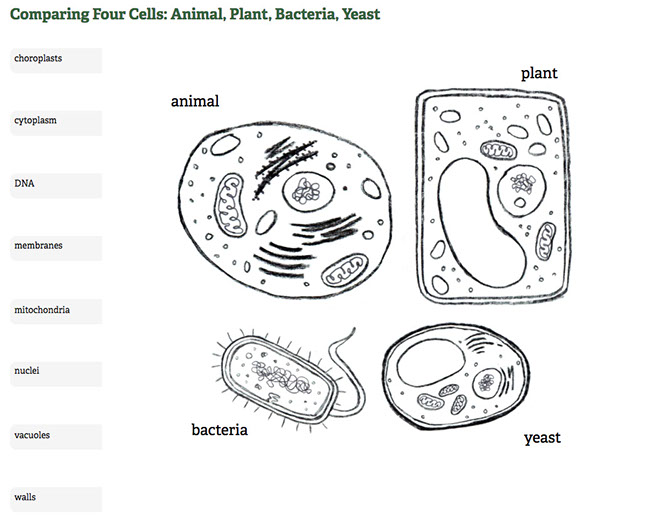
Students use the interactive diagram to see similarities and differences between four kinds of cells: animal, plant, bacteria, yeast. Different other diagrams that label cells with pointers and introduce i kind of cell at a fourth dimension, this interactive diagram uses colour change in the slightly animated diagrams to show which types of cells typically have which organelle.
Why are the cells jittery? Often, cells are shown as static blobs. The lite blitheness serves every bit a reminder that cells are always moving and changing.
Use one of the worksheets for students to make their observations:
a chart to runway which cells typically accept which kinds of parts:

diagrams to label:
Consider having students employ dissimilar colored pencils or pens to show differences between the cells (for instance, labeling creature organelles in brown and plant organelles in green, bacteria in red, and yeast in purple).
Explore 3D animal, plant, and bacteria cell models (twenty minutes)
Hudson Blastoff iCell Resource
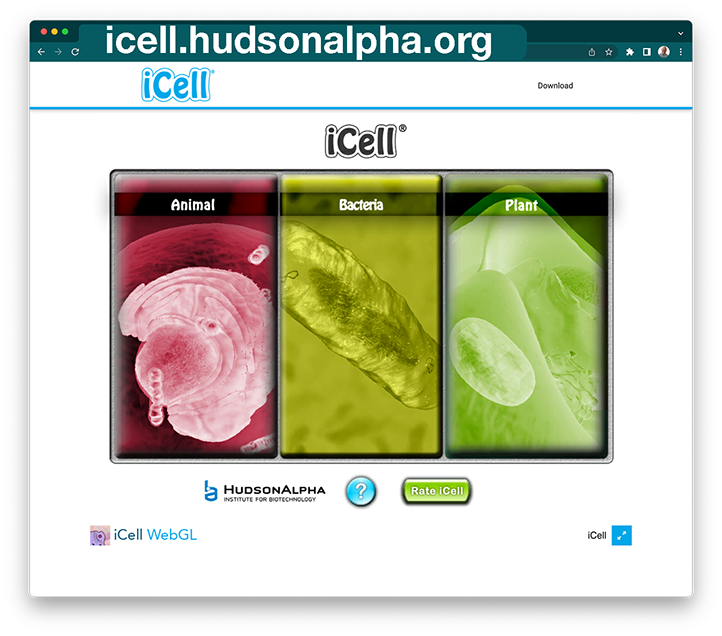
Have students explore three-dimensional models of plant and animate being cells.
One great, free resource to utilise to compare plant and fauna cells is HudsonAlpha iCell®. From their website:
"Some things are very hard to visualize from the flat pages of a book. Amidst them is i of life's basic building blocks: the jail cell. iCell® is an interactive simulation that allows students and teachers to explore the inner workings of a typical brute, plant or bacterial cell. iCell® offers a 3-D representation of cellular components, giving students a context for learning fundamental cell structure and function."
Information technology shows iii kinds of cells: animate being, bacteria, and plant. Unfortunately, it does not include a yeast cell, and you volition need to clarify with your students that yeast is a fungus , non a bacteria.
Students can use iCell® to learn the names and functions of the structural parts of 3 kinds of cells.
Consider splitting the class into groups and assigning a type of cell to each group that they tin can enquiry. After gathering info on their type of jail cell, students return to the primary group to share out what they have learned.
Form Follows Part: compare cells within organisms (15 minutes)
The model cells that we await at as example "animal cells" and "plant cells" may not resemble any item cell you would see in the real world. They evidence elements that are shared in common with many cells, but not all.
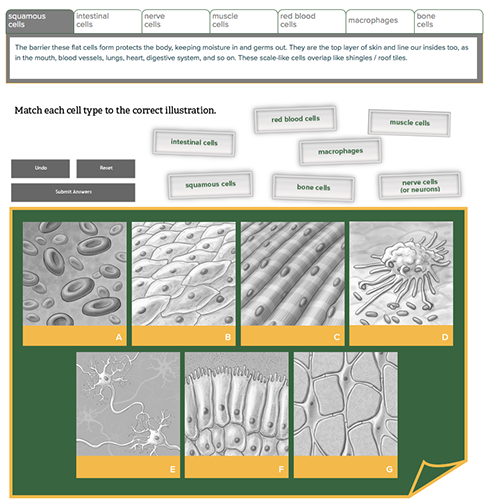
In this part of the activity, students look at how unlike kinds of cells within one organism can look very different from one another. Students sort seven human cells by carefully reading the descriptions of their course and function, then seven found cells.
Human red blood cells have no nucleus and therefore no Dna. Are they still fauna cells if they lack a nucleus? Of course! We often recollect of chloroplasts as the distinct feature of establish cells. But cells within the underground part of the establish — like those in the roots —accept no need of chloroplasts since they can't use the sun's free energy, living as they do in darkness.
Fun fact: In the book Jurassic Park, 1 of the research scientists observes that a small-scale amount of dinosaur blood contained in the amber-entombed mosquito would in fact incorporate plenty of DNA considering modern birds — who are the modern-twenty-four hours descendants of dinosaurs — have nucleated red blood cells. That is, they take DNA in their red claret cells, dissimilar mammals.
Review the activity (10 minutes)
Wrap Up
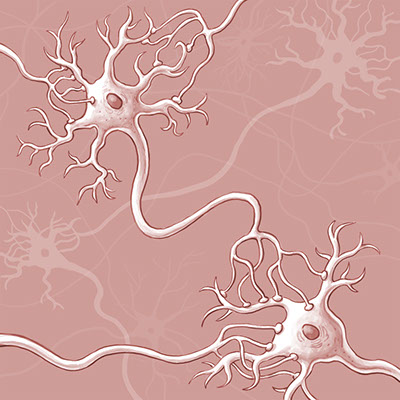
Consider this statement: "A single yeast cell and a whole human being are both considered organisms. And so a single human cell--like a musculus prison cell or brain cell--is an organism too."
 Turn and Talk
Is the statement true? Why or why not?
When finished with the action, ask students to consider this question.
Encourage students to critique, correct, and clarify why this argument is incorrect.
Sample response:
Organisms are (or were at some point) alive which ways they...
- shop and laissez passer on operating instructions;
- get energy;
- obtain building materials; and
- dispose of waste material.
A unmarried yeast cell can exercise all of the to a higher place things but a muscle jail cell--all by itself--can not. Information technology needs all the other types of human cells around it to work together in order to function.
Annotation: This question and its intended response developed past Calibration / SFUSD.
Optional assessment (15 minutes)
Cheque for Comprehension
The cell ______ protects the within of the prison cell from the outside. It lets some materials such equally ______ into the cell, and it prevents other materials from getting into the jail cell.
The ____ in the centre of the prison cell contains ___ which controls the cell like a brain.
Beast cells and constitute cells both have ____, ____, ____, ____, and _____.
Constitute cells have ____, ____, and ____, while animal cells do not.
Because plants sometimes have to go several days without water, they have much larger ____ where they store water in case they need it.
Have students use the notes they've taken to complete the cloze text. A cloze text is an incomplete text missing words that the students observe within the interactive diagrams.
This incomplete text is a Reading to Acquire Scientific discipline strategy within DARTS (Directed Activities Related to Text), a reading strategy designed to support reflective reading. Reflective reading (as opposed to merely receptive reading) happens when a reader breaks and re-reads challenging phrases and passages, really working at understanding. Reading with a specific purpose in mind and sharing ideas in pocket-sized groups can aid back up reflective reading. At that place are two wide categories of DARTs (reconstruction and analysis). This comprehension text is an case of a "Reconstruction DART (with modified texts)." For more about DARTS and other Reading to Learn Science techniques, see serpmedia.org/rtls/darts.html .

 This projection was supported past Science Sandbox, a Simons Foundation initiative defended to engaging everyone with the procedure of science.
Strategic Education Research Partnership
1100 Connecticut Ave NW Suite 1310 • Washington, DC 20036 • (202) 223-8555
info@serpinstitute.org
Source: https://www.serpmedia.org/scigen/l7.2.html
Posted by: najerafortionle.blogspot.com
0 Response to "How You Identify Plan,animal And Bacteria Cells"
Post a Comment